Change a lamp and let the world change… If only…
· PLD Türkiye
Automatically translated from Turkish. Read the original
 First Australia decided to ban incandescent lamps (the light bulb, as most people call it). Then the UK, Ireland, Canada and other countries followed, and in the end the European Union (EU) followed the same decision… Here in Türkiye: the energy efficiency campaign, the launch of ENVER, the "one lamp, one tree" and "one million lamps, one Keban" comparisons (Keban is one of Türkiye's biggest hydroelectric dams) that you heard everywhere, and energy-saving lamps handed out for free… A fast change, all within two or three years. So what has really changed in this short time? And the real question: where is this change taking us?
Look at it and you see a very, very fast process, all within 2 or 3 years. The bulb that Edison invented 120 years ago is banned, and energy-saving lamps take its place. What happened? How did a simple technology, unchanged for so many years, suddenly become the whole world's arch-enemy and, with a bit of exaggeration, the only culprit of global warming?
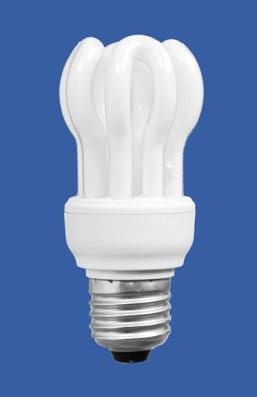
It all started with a simple calculation that pushed every country to act fast. The incandescent lamp (let's call it the bulb from here on) is, as we said, a simple thing: a metal gets very hot and starts to give off light. That is why it wastes 80% of the energy it uses. Energy-saving lamps in general, that is fluorescent lamps with integrated ballast (compact fluorescent lamps, let's call them CFLs from here on), have a more complex structure. Electricity passes between the electrodes at the two ends, and the mercury and phosphor inside the tube turn it into light. And unlike the bulb, they give "more" light for the electricity they use. That is why people call them the more energy-saving lamps. When you make certain conditions equal and accept some assumptions, this efficiency gap even reaches 80%. This simple calculation leads every sensible person to the same decision. Under these conditions, why would we use the bulb at all? Let's get rid of these energy monsters, let's explain this to the public, and if that's not enough, better still, let's ban these lamps.
To see that the process was not this simple, we had to hear some dissenting voices. The first ones came from lighting designers. The article by Gad Giladi in issue 21 of our magazine (October-November 2008) was the best organised and clearest of them. In short, Giladi questioned the arguments behind the ban. He drew attention in particular to the mercury in CFLs, small as the amount is, and to what we need to do to recycle it. (You can read the full article at this link: http://issuu.com/pldturkiye/docs/sayi-21/72)
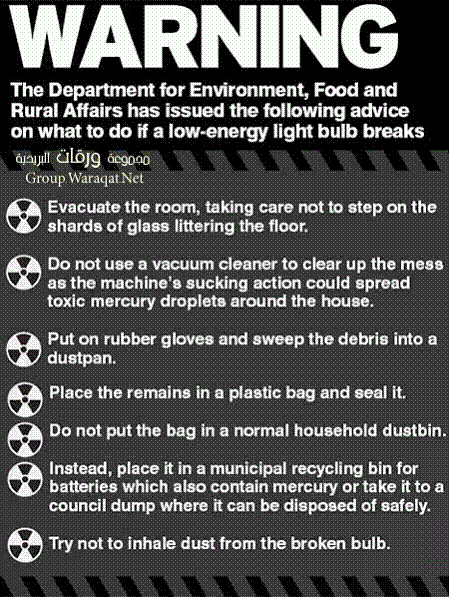 In the same period, though nobody knows exactly where they came from, more and more people started to get emails like the one you can see in the article: What to do if a CFL breaks… These emails carried radiation and poison symbols, and what they said was simple but frightening. They said that if a CFL broke for any reason, the mercury inside would mix into the air, and that this could cause some diseases, cancer first among them. Consumers were confused.
Meanwhile, here in Türkiye, the ENVER campaign made the subject a real part of our lives. Maybe because I am inside the industry, maybe it was selective perception, but for a while I ran into a new statement from our Energy Minister Hilmi Bey every other day. He talked all the time about the "one tree, one lamp" equation, built on the simple calculation I mentioned at the start, and a lot about the Keban Dam. He also talked about energy-saving lamps handed out for free, a system used in Türkiye (and, I think, only in Türkiye).
Hilmi Bey started from one of the most basic ideas in marketing: he simplified the message and made it easy to understand. He is not the first. Around the world, many people and organisations, Greenpeace first among them, have done the same. And these days, when speed has taken over every part of our lives, you could even say he did the right thing. But our example will show that this message, sadly by its nature, can lose its meaning as it gets simpler. It can even become dangerous. And in my view, the situation is now so frightening that we must act as soon as we can: to give this message correctly again, and to take the steps we are already late to start.
Why?
- Saving energy is not just changing a lamp. Replacing the right lamp with the right lamp matters too.
CFLs save energy. True. As long as you use them under the right conditions, of course… The lifetimes printed for energy-saving lamps assume a lot of fixed conditions: laboratory conditions (room temperature), switched on once a day, and on for four hours a day. If you use them somewhere these conditions don't hold, that lifetime gets shorter. This cancels out the energy the CFL would save, or cuts it a lot. So, for example, I can guarantee you that the big energy-saving lamps the döner shops I saw on Taksim Square hang outdoors won't last very long. Or take the CFLs you use in a room you only step in and out of, a corridor or a storeroom: they will sadly end up in the bin well before the lifetime written on the box. (Don't throw them in the bin, by the way, but I'll come to that later.) Also, CFLs are not really recommended for closed luminaires, and you can't dim every CFL. These are some of their other known drawbacks. To be fair, there are also CFLs made for frequent switching, for dimming, or for cold conditions. But as I said, when the message gets simpler, facts like these sadly slip out of sight. Another painful example from the public sector: this year the Prime Minister issued a circular to change the lamps in public buildings, and the estimate was only about a third of the number of lamps changed in the end. 1.8 million lamps were changed; the first estimate was around 600 thousand. So the decision to change 1.2 million lamps is open to question.
- Saving energy is not just changing a lamp. It is replacing the right lamp with a quality lamp.
When a subject gets this popular, the Turkish entrepreneur sees an opportunity. As CFLs grew more popular, it is no surprise that people who wanted to turn this into easy money brought in, to put it plainly, poor-quality cheap Chinese goods. (I say poor-quality, cheap Chinese goods on purpose, because where a product is made does not decide its quality: every brand makes its CFLs in China.) An email I got about four or five months ago showed that we were not late on this front either. A sharp operator, with his name, surname and mobile number at the bottom, wrote that he had 129,000 energy-saving lamps of brand X and wanted to sell them. A small photo, taken with a mobile phone on a counter or a table, was the only picture in the email. A month later came another email, this time straight from China, and funnily enough it tried to sell me the same brand of lamps. Of course, once again, as the message got simpler, the stress on quality disappeared. Everyone forgot that a consumer who already has to pay more up front than for a bulb may slide to the cheaper option.
- Saving energy is not just changing a lamp. Good lighting design works far better than changing lamps.
Doesn't it make more sense to you, too, to get rid of the lamps we don't need than to replace the ones we have with more efficient ones? In other words, shouldn't we ask the real question first: do we really need that lamp? Or do we have to keep the same light level all the time in a space that serves different uses through the day? Couldn't we adjust these levels with lighting automation?
An expert lighting designer can give you the best answer to these questions and others like them. The lighting designer is responsible for defining the relationship between the space and its user in the best way. In the same way, the lighting designer is responsible for the energy the system uses over its life, for the maintenance costs and for planning them. We must look at each system on its own terms and make the right choices for its needs, priorities and means. Believe me, this process improves the system's efficiency far more than just changing lamps.
- Saving energy is not just changing a lamp. It is recycling the lamp at the end of its life.
Yes, let's come to why I told you near the start not to throw these lamps in the bin. For those who don't know: CFLs contain mercury. (Some brands now use amalgam instead of mercury.) In good brands it is around 2 mg, but in poor-quality products it can be over 6 mg (in old fluorescent lamps it was around 15 mg). The EU standard, for now, is 3 mg. So if a CFL breaks in your home, you may need to take some precautions, such as airing the room and not using a vacuum cleaner. (Again, some brands use technologies that stop the mercury from escaping when the lamp breaks.) And yes, these lamps must go into recycling at the end of their life (this applies to every brand). But the same recycling applies to many other products too, like the batteries we use at home. So while we worry about lamps, we can't ignore batteries or any electronic product that contains substances harmful to nature. As AGİD's statement says, these systems must be set up for all products under the European Union WEEE Directives.
What is frightening is this: Türkiye has companies that work in recycling, but sadly there is no solution yet when it comes to compact fluorescent lamps. (Or I just don't know about it. If anyone has information on this, I would be very glad to hear from them.)
Under the ENVER campaign, close to 10 million CFLs will be handed out. With that in mind, you can see why I am worried. The interesting part is that, America aside, Türkiye is not far behind the rest of the world on this. America has a much wider recycling network for this, while Europe is still crawling. America, rightly in my view, turned the subject into a business. It made recycling a commodity, and an industry grew out of it: companies that collect and recycle lamps, and, as their numbers grew, even an association of them. In parallel, America launched the "Energy Star" programme, backed and owned by the environment ministry, NGOs, lamp manufacturers and recycling companies. With it, America has started to raise public awareness and has managed to spread recycling. Giant chains like IKEA and Wal-Mart must take back dead lamps and send them for recycling. Yet apart from smaller programmes in Germany and Switzerland, many countries across Europe are at least as much "in the dark" on this as we are. It is not much to celebrate, but it does show we are not too late. Türkiye, too, must urgently analyse the situation correctly, decide the steps to take, bring the institutions involved together, and set up programmes like "Energy Star". And there is a job in this for all of us.
One thing is clear: we don't have the luxury of not using energy-saving lamps. With the threat of global warming and our limited energy resources, we have to use energy efficiently. So we should use CFLs and encourage their use. But we must explain how to use them correctly with just as much care, and we must not wipe out the details for the sake of a simpler message.
So, the time to change "the message" has come, and it is already slipping away. It is a bit long, but here it is:
Saving energy means replacing the right lamp, chosen within good lighting design, with the right quality lamp, and sending lamps at the end of their life into recycling...
Emre Güneş
Editor, Professional Lighting Design Türkiye magazine
Professional Lighting Designers’ Association Representative for Türkiye
Sources:
http://www.energystar.gov/
http://www.almr.org/
http://www.savethebulb.org/
http://www.banthebulb.org/
Statements on the subject:
Aydınlatma Gereçleri İmalatçıları Derneği (AGİD, the Turkish association of lighting equipment manufacturers)

The efficient use of energy has become a subject that countries around the world have focused on closely, especially in recent years. The reasons are limited energy resources, problems in energy supply and a number of environmental concerns.
In today's world, electrical energy is essential for economic and social development. Demand for electricity grows year after year. Governments, social institutions, companies and private initiatives develop projects and bring out products so that people use it efficiently in industry, in services, in homes and in every other area one could list. Lighting, where people use electricity heavily, sees many similar initiatives.
A study by the International Energy Agency (IEA) states that lighting uses 19% of the electricity consumed in the world. For Türkiye, a study by İstanbul Technical University put this figure at about 25%. When you consider all the areas, large and small, where daily life uses electricity, this figure for lighting deserves attention.
For this reason, energy efficiency in lighting has come a little more to the front than other energy efficiency measures, because it is easy to apply and costs relatively little. Because of the developments above, lighting companies today develop energy-efficient lighting products and solutions fast and bring them to market. Today you can find energy-efficient lighting solutions in many places, from home lighting to office lighting, from road lighting to shop lighting.
These solutions range from simply changing a single lamp to using complex lighting control systems. Home lighting uses a large share of the electricity consumed for lighting. Here, both governments and lamp companies try to encourage the quickest and cheapest way to save electricity: just changing the lamp.
Home lighting today still mostly uses incandescent lamps. But because of the way they work, incandescent lamps turn only a very small part of the electricity they use into light, and waste the rest as heat. So one can easily say that incandescent lamps waste a lot of energy. Compact fluorescent lamps with integrated ballast, a technology that goes back about 15 years, are the solution here. They can take the place of incandescent lamps and give the same light level with about 80% energy saving.
Use of compact fluorescent lamps with integrated ballast has grown extremely fast in recent years, both in Türkiye and around the world.
As use grew this much, questions and doubts about these lamps naturally came with it. The first thing people question is the harm that the mercury in these lamps does to human health and to the environment. But we must not forget that compact fluorescent lamps with integrated ballast, which came to market about 15 years ago, are not a new technology in themselves. They are a reshaped form of tubular fluorescent lamps, which first went on commercial sale in 1938. So the mercury that fluorescent lamps need to work has been part of our daily lives since then. For this reason, it is not a correct approach to raise the harm of mercury to human health and the environment as if it were a problem of compact fluorescent lamps with integrated ballast. Another important point is the progress in the amount of mercury in low-pressure mercury vapour lamps, the product group that includes both tubular and compact fluorescent lamps.
Lamp manufacturers work seriously to bring the mercury in lamps down to a minimum, in line with technological progress and with international regulations that protect the environment and human health. Fluorescent lamps that held around 15mg of mercury 5 to 10 years ago now hold less than 2 mg.
By the way they work, gas discharge lamps need different elements. Mercury is one of them, and with today's technology it is not possible to bring the mercury gas in gas discharge lamps down to zero.
Another issue raised in recent years is the disposal and recycling of used compact fluorescent lamps with integrated ballast. But the point to underline here is that these lamps must be handled under the WEEE ( Waste of Electrical and Electronic Components ) standard, which also covers all other electrical and electronic devices. In other words, the issue is not only the disposal and recycling of fluorescent lamps with integrated ballast. It is the disposal and recycling of harmful substances in all electrical and electronic devices. Given the work and progress on this in Türkiye so far, there is a clear need for action, especially by government bodies, and for someone to coordinate the work.
Finally, designers in particular have raised a criticism: compact fluorescent lamps with integrated ballast cannot equal incandescent lamps in where you can use them, how they behave in use and the quality of their light, so these lamps cannot fill the gap a ban on incandescent lamps will leave.
It is true that incandescent lamps work on a completely different principle from compact fluorescent lamps, so their light characteristics and properties are not the same. But lamp manufacturers today have taken these concerns and needs into account. They have widened their compact fluorescent ranges a lot, in design, in light colour and in how you can use them, and with future needs in mind they are putting more weight on new product development.
Today you can easily find compact fluorescent lamps with integrated ballast on the market in many different shapes and sizes, in different light colours, and able to work on dimming circuits. Despite all these developments and alternatives, some consumers still won't give up the light of incandescent lamps, and companies carry other energy-saving solutions in their ranges for them. Energy-saving halogen lamps, on the market for the last few years, save between 30% and 50%. They do not use energy as efficiently as compact fluorescents, but they can be a good solution for consumers who look at lighting from other angles.
It is a fact that compact fluorescent lamps with integrated ballast, proven to meet certain internationally accepted standards, give the greatest benefit to both end users and the environment when you use them in the right place and in the right way. One can say that this benefit would rise much higher if government bodies urgently put in place the legal and environmental rules needed for all equipment and devices that contain substances harmful to the environment.
Elektrik İşleri Etüt İdaresi (EİE, the Turkish state Electrical Power Resources Survey and Development Administration)

As we all know, all fluorescent lamps (compact lamps included) contain mercury. Technically, they are all called low-pressure mercury vapour lamps.
In recent years, the phosphor layer inside the glass tube has become more efficient with UV light, so tubes have become thinner and their mercury content has gone down. But they still contain mercury in the range of 1 to 2 milligrams.
Their danger comes from mercury being toxic. At the end of their life, these lamps must be collected at dedicated centres, and the mercury inside must be recovered before it spreads into the atmosphere and before any living thing breathes it in.
Türkiye does not yet have such centres or practices.
Derya Aydemir
Electrical Engineer
Elektrik İşleri Etüt İdaresi
Greenpeace Statement
 To save the climate, the first step must be to ban waste bulbs
At Greenpeace, we argue that the sale of incandescent bulbs, which we call "waste bulbs", must stop all over the world as soon as possible. In Türkiye, too, the government must ban waste bulbs as soon as possible. The reason is simple. Every year, incandescent bulbs put millions of tonnes of carbon dioxide into the atmosphere for nothing. Now that we have CFLs, the efficient bulbs, nobody should keep insisting on waste bulbs that are past their use-by date. In short, if we want to save our world from the effects of climate change, we must push energy efficiency as high as it can go. Efficient bulbs must be part of this rescue operation.
According to Greenpeace's roadmap called Energy Revolution, which covers the period from 2007 to 2050, a ban on waste bulbs could cut carbon dioxide emissions by up to 5% worldwide. And this is probably the easiest of all energy efficiency standards to put into practice. Today energy-saving bulbs cost more than ordinary incandescent bulbs, but they use less electricity and last longer, so they also save the consumer money.
As for the mercury in efficient bulbs: at Greenpeace, before we set our position on these bulbs, we thought the mercury issue through carefully. This was our conclusion: 50% of the world's mercury pollution comes from thermal power stations. And the amount of mercury in efficient bulbs keeps going down. If we look at it from an environmental point of view, we should choose the option with the lowest environmental cost. According to data from the US Environmental Protection Agency, the mercury pollution you put into the atmosphere with a waste bulb reaches 6 milligrams, while the effect of an energy-saving bulb stays below 2 milligrams. This proves that using more electricity, which means burning more coal (in thermal power stations, to make electricity), is indirectly the dirtier choice.
Hilal Atıcı
Greenpeace Mediterranean
Climate and Energy Campaigner