What is a PLDA workshop?
· PLD Türkiye
Automatically translated from Turkish. Read the original
An open invitation to see what light can do…
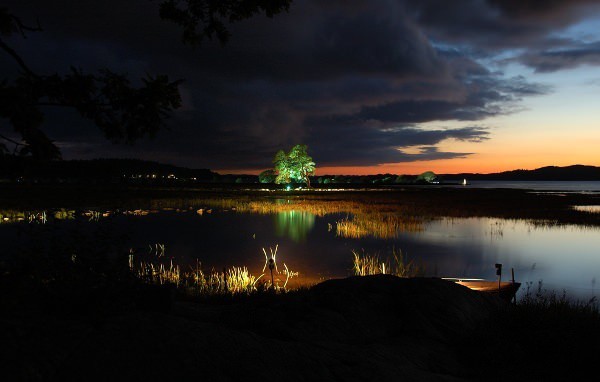
The Professional Lighting Designers' Association (PLDA) has organised an event since 1999: a workshop… To date the workshops have been held 25 times in 16 different cities, Rotterdam, Birmingham and Berlin among them, and the latest took place in the city of Alingsas in Sweden, between 24 and 29 September.
60 participants from 20 different countries, from 6 different countries, 8 exceptionally talented lighting designers, and a city with a vision, hosting the event for the 8th time…
I want to introduce the PLDA workshops to you through my impressions of this event, which I joined as a participant.
Workshop is a concept applied today in many different fields, and it offers a point of view different from classic education, which is built from the one who teaches (who explains) and the one who learns (who listens). This concept, which can be defined at base as work that rests on the group's active participation, of course differs greatly, by its nature, according to the field it is applied in. Workshops are an effective way of teaching especially when the subject is something people can understand only by seeing, touching and feeling, and the first example of this in the field of lighting design is the PLDA workshops.
The event lasts 1 week in total. The process starts on Monday, when the participants and the lighting designers come together, and ends with the international conference held on Friday and the opening that takes place that night. Of course, all the work prepared, the designs and the light installations, wait for their visitors for about another month, but the participants have left the city by around Saturday noon. So what happens in this 1 week, briefly summed up? Come, let's look at it a little more closely.
Day 1: Introductions - Marketing
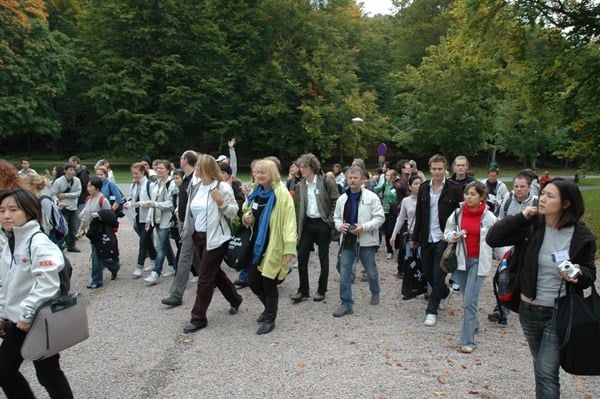
On the first day (Monday) all of us participants meet in a school in the city centre. There are 60 participants from 20 different countries, filling the conference hall. Among the participants, divided into different age groups, there is a wide and colourful range of people studying lighting design, architecture and urban planning, from students to architects, interior architects or young lighting designers, and to people working as gardeners at the municipality.
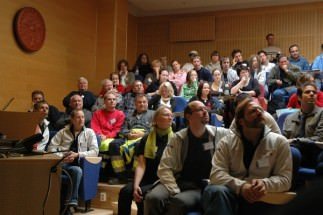
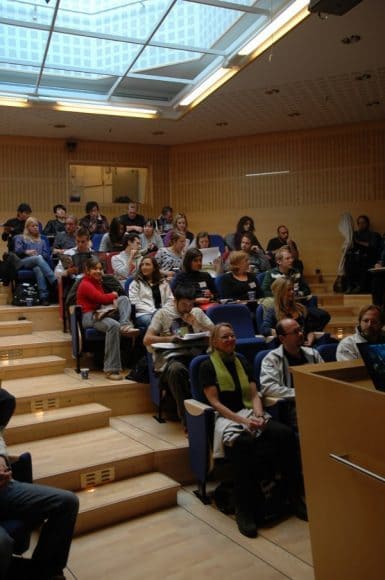
One after another, the people from the municipality who are involved in the subject introduce themselves and their aims. We learn in more detail about the city's past and about its plans for lighting design. It is genuinely exciting to hear the investments the local government of this small town of 30,000 people made in 2000, with 2010 set as the target, and to hear its vision for the future. After all, Alingsas is quite experienced with PLDA workshops, and this year they are hosting the event for the 8th time.
Then PLDA General Manager Alison Ritter and PLD International Editor-in-Chief Joachim Ritter give their presentations. We learn how the workshop runs in general, and, in rough outline, how a week will go. And we are briefed especially on safety. What to do and what not to do is explained one by one, drawing on past experience too. After all, they are addressing a group like this for the 25th time, and they know better than we do how careless and negligent we can be!
We come to meeting the lighting designers: the people who, throughout the workshop, will guide each group, advise them, and, by sharing their experience, make sure the project is completed as intended… Lighting designers from different corners of the world, people who have practised the profession for a long time, who have proved themselves worldwide, each one talented…
They are not coming to the city for the first time. 6 months ago they came to Alingsas, held meetings with the municipal officials and chose the areas they wanted to work on. After an exchange of views, it was decided to create 6 different project areas in Nolhaga Park, inside the city, where people walk in their free time. It was also asked, specific to this year, that these 6 separate areas form a whole and be positioned like the 6 separate legs of one shared project. So an imaginary walking route was thought up, with a start and an end, fitted to the chosen project areas.
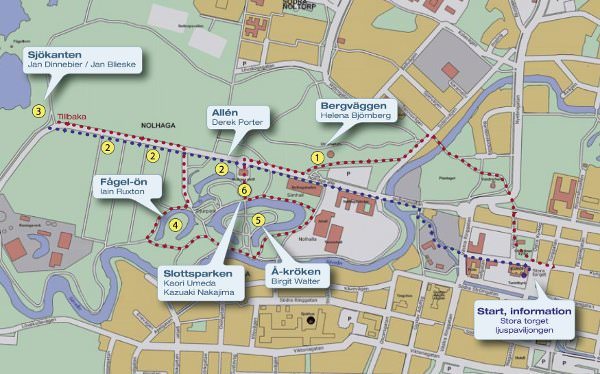
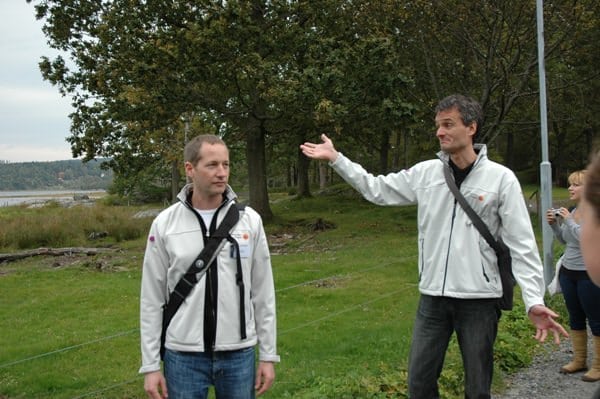
There are 8 lighting designers. From Japan, Kaori Umeda/Kazuaki Nakajima, from Germany, Jan Dinnebier/Jan Blieske, from Scotland, Iain Ruxton, from Sweden, Helena Björnberg, from the USA, Derek Porter, and from Spain, Birgit Walter… Two groups will have at their head two lighting designers who have decided to work together. Each of them introduces themselves and talks briefly about the project areas. Then everyone in the hall introduces themselves one by one. Once this round of introductions is finished, it is time to tour the project areas. We reach the project areas on foot, and there we listen to the lighting designers too. Marketing their projects matters for the designers, because in the end every participant has the chance to work on the project they want. Along the way I try to talk to each of the designers and get to know them.
When the tour is over we go back to the conference hall, make our choices and write down our 3 preferences. Because each group has a set minimum number of people, even if some of us are assigned to our 2nd or 3rd choice, by the end of the process everyone has settled the place, the people and the lighting designer they will work with.
Now it's time to bond!
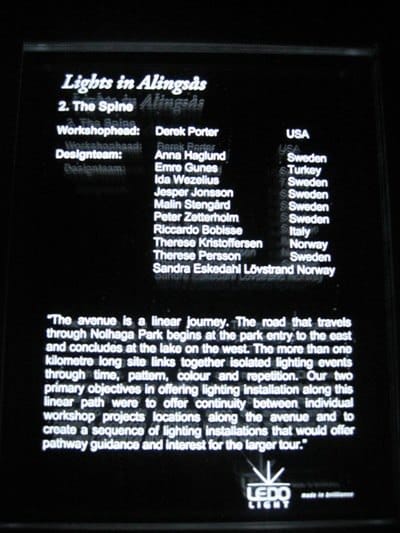
I choose the group of Derek Porter, director of Parsons School of Design in New York. On the team there are 6 Swedes, 2 Norwegians and 1 Italian. Two of them are architects, one is an urban planner, four are lighting design students, and two are stage design students… After a short round of introductions we set off to tour our work area in more detail. Our project is the lighting of a street about a kilometre long. Along the street we take plenty of photographs and we chat. We try to understand the elements that can be brought forward architecturally, the structures that catch the eye, and to pick out the factors that will make our job easier or harder. The street's basic role is to act as a bridge between the projects and to show visitors the way, but while it does that, there is no reason they shouldn't spend this time in a way that is aesthetically satisfying too! Making this walk meaningful with light installations is our job.
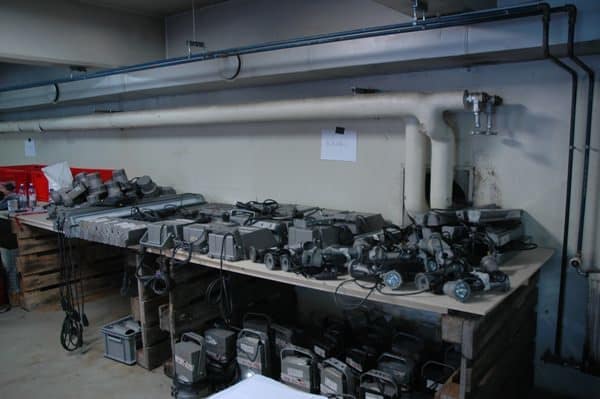
There are 3 places we will shuttle between during this one week. The project area, the store where all the luminaires are, and the work room where we will hold our meetings. First we visit the store. The store, supplied by PLDA from the sponsors, is full of luminaires whose total monetary value reaches a high figure. As you can tell, a complete paradise. They set off from Germany in a truck and arrived, and even under the supervision of the PLDA technical assistants, they are all at your command…
Then we move into the room. The work room is a space where we will research and discuss our ideas, and later turn those ideas into drawings. Our room is inside a shared building, together with the other groups. You could call it headquarters. Every need has been thought of: scanner, printer, computers, an internet connection, a kitchen, a sink…
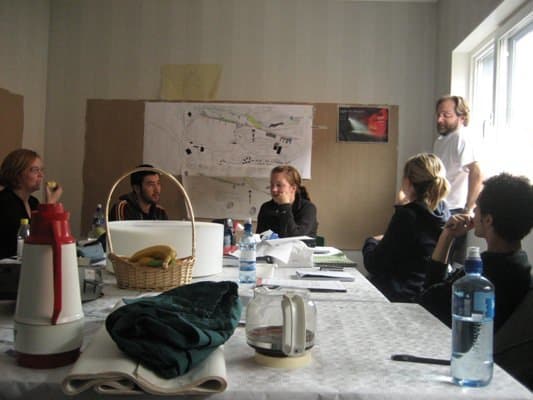
First Derek talks in general about the processes to do with design. The elements design feeds on, the point of view there ought to be, the things to watch. Then everyone shares their ideas about the project. The question we're looking for an answer to is this: what should people feel as they walk this street? Or what do we want them to feel? The basic question of lighting design is what kind of interaction there will be at night between the user and the space.
Before we decide, we also want to see the street in the dark. We try to understand the street's existing lights. The street lights, the lighting of the buildings around the street: each one is an element that will affect the design. We keep taking photographs and discussing.
Days 2-3-4: Concept – Trial – Finish
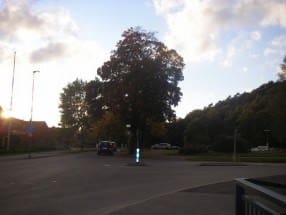
On the second day we first map the area. Discussing over the map, we decide that we have to identify the elements to be lit along the street, which runs to 1 km, and that we have to split into groups accordingly. While we identify these elements we concentrate on the architecture and on our aim. The first reflex: the tour has to start somewhere, we have to mark a starting point. Because however much a walking route has been imagined, we are talking about something imaginary, and making it real falls to us. At this point we should say “welcome” to our visitors. Two trees facing each other at the entrance to the street catch our eye. Thinking the tour can begin by passing between the trees, we settle on the element's name. “Gateway” (Geçit).
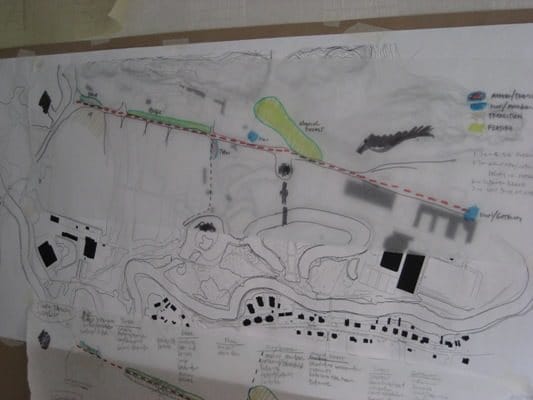
After this start they will see the first project straight away, then walk on to the second project. During the walk, the first area they will look at is the wooded stretch that stays on the right of the road. The trees are not very dense, their heights differ, and the structure is irregular. This structure gives us the idea of creating a mysterious setting and drawing interest here. So the second element is “Magical Forest” (Büyülü orman).
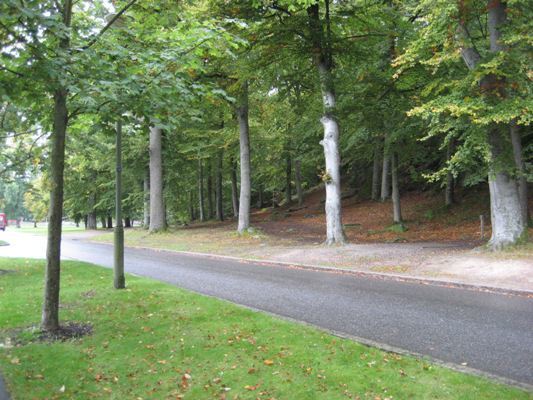
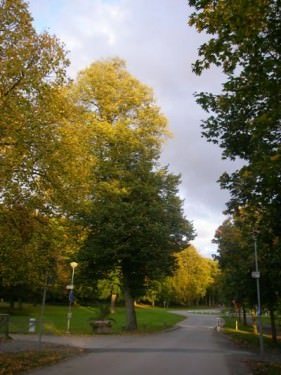
Where the trees end, the road bends on, and at the point where it straightens a tree comes at you in all its splendour. The tree is so dominant that it doesn't take us long to decide to use it while guiding people. The way it stands, like a symbol, gives us the name of the third element. “Icon” (Simge)
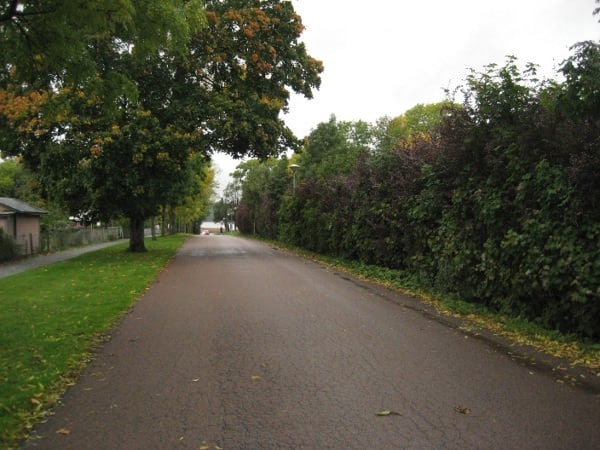
The road that follows the Icon is narrower. On its left there are short trees lined up two metres apart, while on the right, along fifty metres divided by the street lamps, it is covered by planting one to one and a half metres tall. The fourth element is this area. “Hedge” (Çit). After that there is a bare stretch, only the street lamps and the asphalt road. Our fifth element is this road too. “Porch” (Veranda).
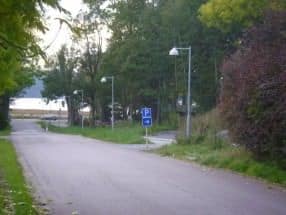
After the second project has been visited, the visitors will return by the same road and go on to the third project. After they pass “Porch” and “Hedge”, we have to make it clear that they should continue along the path that turns off to the right. We decide that the three trees in a row at the start of this path are made for the job. Our sixth element is “Turn” (Dönüş).
We split into subgroups and share out the elements. Now it's time to put these ideas into practice and try them!
The work has to be finished by Thursday evening, cabling included. And we have 3 nights in total. We go to the store and choose products. In the evening we make our first trial.
The whole team more or less knows what it wants, but what we'll get by using the products isn't clear! Our first night is 4-5 hours spent in the Swedish cold, and full of disappointment. We have problems that didn't appear on paper. For example, the street lights bother every group a great deal. They are so flat and harsh that they meet us everywhere as the most dominant light. They limit our room to move. At many points along the street we decide either to switch them off or to filter them. Through the night, technical support from the municipality on hand, hot chocolate and a banana top-up arriving twice, and the technical students who help us with cabling and electrical matters are the things that make our job easier…
On the third day (Wednesday) we meet early. After yesterday's trials, some points become clear. Warm red tones that say welcome will be used in “Gateway” and in “Turn”, and green will be used in “Icon” to catch the eye. The street lamps will be filtered in 3 layers, and close to half of them will be switched off. Because the filters will be placed inside the lamps, we have to cut 75 filters from one sample lamp. The restaurant lights beside “Porch” glare far too much. We should talk to the owner and switch some of them off. In the Magical Forest we're short of projectors. Our needs run from 75 watts to 250 watts. We list what's missing. In “Hedge” we have to mount projectors on the street lamps, and for that we have to build a special mechanism. We'll draw the mechanism and build it from boards. Again, for “Hedge”, we need the fluorescents we have to place under the planting. Colour in particular is a problem. “Hedge” is an area divided into 5 by the street lamps. We have to find an answer to whether it will be irregular, or whether the same colours will repeat after each lamp.
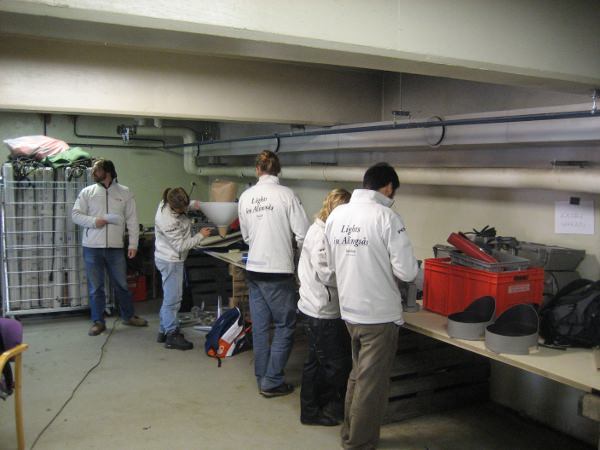
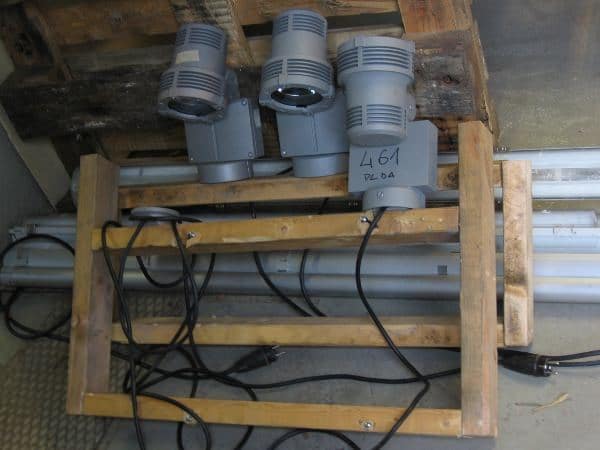
After intensive work during the day, we're ready. The rain starting makes everything harder. A long night waits for us. In “Gateway”, the difference in height between the two trees facing each other weakens the effect. When the trials fail, we decide to light the taller one. In “Magical Forest”, placing the projectors in the trees slows things down. But the work can be done with a special ladder vehicle belonging to the municipality, and we need that same vehicle for filtering the lamps too. In “Turn”, the aim is to place the projectors on the 3 trees so that each one sits 25 cm lower than the next, and thus, seen from a distance, to get an arrow that shows the direction of the other project. And again we need the same vehicle. The vehicle shuttles between the groups. For “Hedge” we arrive at a mix of blue and green over the planting, and warm colours at the foot of each lamp. But on the way back after the second project, the spots on the lamp posts cause glare. We have to stop the glare. Tomorrow at noon we'll have additions for the spots. The work, with our cabling and the details, goes on until 3. We're all exhausted. Tomorrow evening, in the company of the municipal officials, the PLDA representatives and the organisers, the projects will be toured and officially taken over. By the end of the night we still have a few small gaps, especially in “Hedge” and “Magical Forest”, but the project is almost finished.
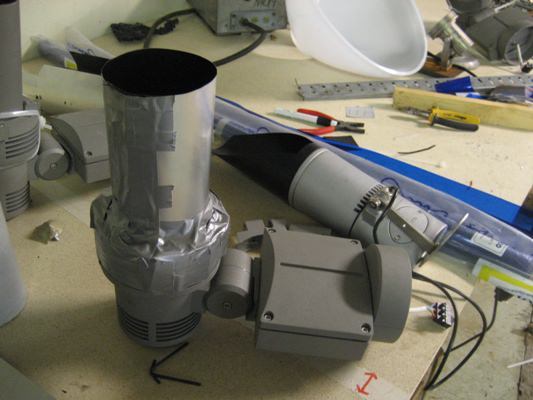
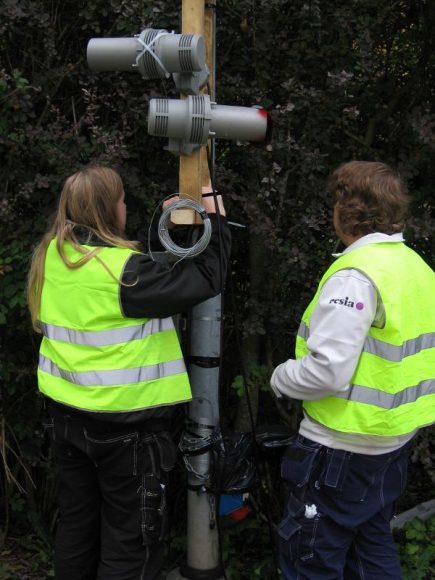
Tomorrow morning we meet early again. During the day the remaining gaps have to be completed, and the presentation has to be prepared to be given at Friday's conference. While some of us work on the last gaps in the store and some on site, I prepare the presentation we'll give. Gathering the visuals, drawing the broad lines and turning it into a 10-minute presentation takes longer than I expected. But with a freezing cold outside, I'm among the lucky ones, working at headquarters!
The official handover happens around nine at night. The result is satisfying! The installation that came out in such a short time is a source of pride for all of us.
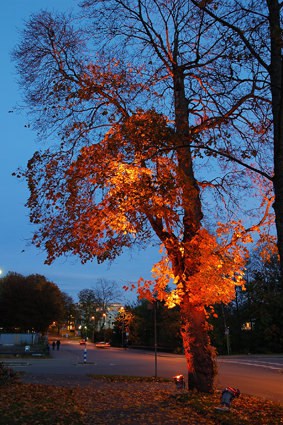
Even though “Gateway” has lost one wing, it still manages, in all its splendour, to say “welcome” to the guests.
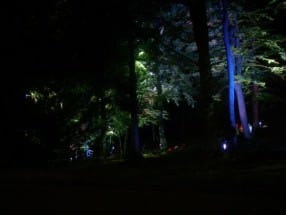
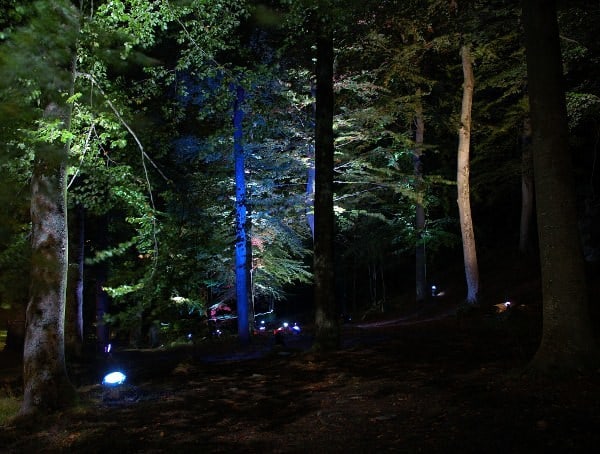
“Magical Forest”, partly under the influence of the film “Lord of the rings” too, answers our need for mystery. Different light colours and levels give the forest depth.
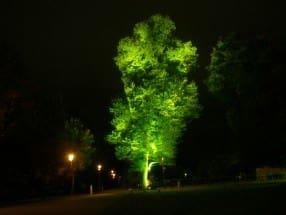
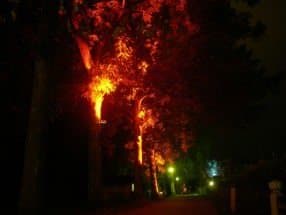
“Icon” has a green strong enough to be seen from the start of the street. At the end of the forest, people certainly won't get lost!
“Turn”, for its part, does its job of showing the way properly.
Day 5: Conference – Opening – Fun
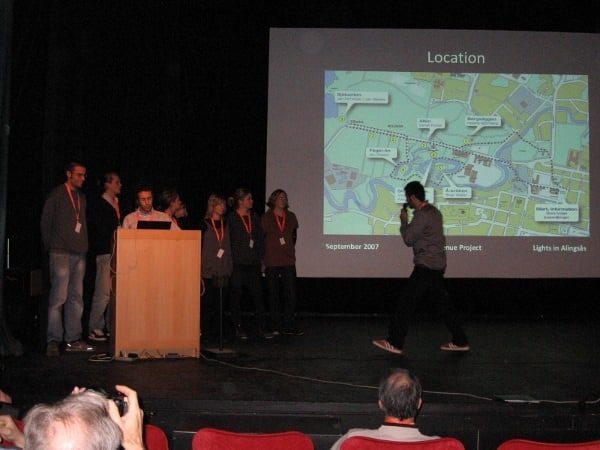
On conference day there were close to a hundred participants in the hall, from various cities in Europe. The conference, on “The elements of landscape lighting, light + nature - distance and nearness”, began, a bit classically, with opening speeches. After the speeches we watched a video about the “Lights in Alingsas” event, prepared by high-school students. Thanks to the video we got the chance to see the event through the public's eyes. And through street interviews and figures, we saw the life the workshop brought to the city's economy. Then each group gave its presentation and took questions. In particular, we were asked not to show the finished state of the projects in the presentation. We talked more about our starting ideas, the process we went through, which points we paid attention to, and what kinds of problems we ran into. Defending your project on stage was also an instructive and important part of the workshop. After the conference, which ended with the presentations given by the lighting designers, we got, for the first time in this tiring week, the chance to rest for two or three hours, and we scattered to separate corners of the city.
Around seven in the evening there were events in the city square for the opening. The concert in the square, the exhibition made up of images from the workshops held so far, the dance shows, the speeches: each of them was there to get the people filling the square ready for the opening. Around nine the start was given for the first tour. During this tour, like every group, we too waited at our project and gave information to the public and to the curious. These two hours, as if confirming the video shown at the conference, were an incredible chance to see the positive effect of the workshops on the public. Seeing the interest of people from very different age groups, answering their interesting questions, and participation this intense were enough to prove the success of a workshop that has become a tradition…
And at last it was time for the fun!
At 10 all the participants come together for the cocktail and the concert. We throw a party where everyone who put in the work comes together and, in a sense, shakes off the week's tiredness. To the rock'n roll classics of the eighties, we take to the dance floor. And having fun with the people you've been working with, night and day, for a week is a pleasure of its own!
Day 6: Goodbye
On Saturday we meet around eleven, a halfway reasonable hour, pick up our certificates, share our critiques of the week with the PLDA officials, and of course exchange plenty of emails. With wishes to meet again later, around noon we leave the city, not to see again, except in photographs, the work we produced in this short time. While I think about the emotional bond you form with a project, which I see as the most enjoyable part of lighting design, I want to end the piece by also giving you some figures for this year's workshop:
Thanks to the promotional work of Alingsas municipality
Within 1 month about 75,000 people visited the projects.
For the project 4,200 metres of cable were laid.
250 luminaires were installed.
370 hours it stayed on.
24,000 watts of energy were used.
224 guided tours took place.
The PLDA İstanbul Workshop, 2009 or 2010… After seeing with my own eyes what an event like this contributes to a city, I'm much clearer on this: it should happen, and it will! At least, that's what we're working for…
Photo gallery:
[gallery link="file" order="DESC" columns="4"]