What is light pollution? The work in Türkiye
· PLD Türkiye
Automatically translated from Turkish. Read the original
When light pollution comes up, I see many people surprised. The first thing that strikes them is that the idea makes no sense, and they ask straight away: “What does light pollution mean? Can light pollute too?” The answer always makes them more curious. Because light really can pollute. How? Let's look at the details together.
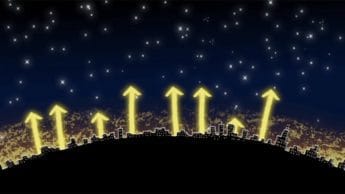
Put simply, light pollution is what happens when light from undesigned/unplanned lighting escapes into the sky, hits dust and similar particles, and forms a curtain between us and the stars.
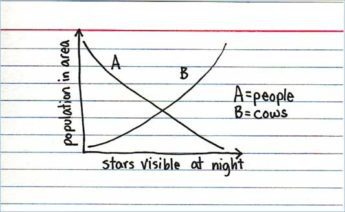
This curtain gives us the chart below, which I also use in my talks: the relationship between the number of stars in the sky and the number of cows around you. Whenever we move away from the city (from modernity), we get the stars back, as if there were no stars in the sky above our cities…
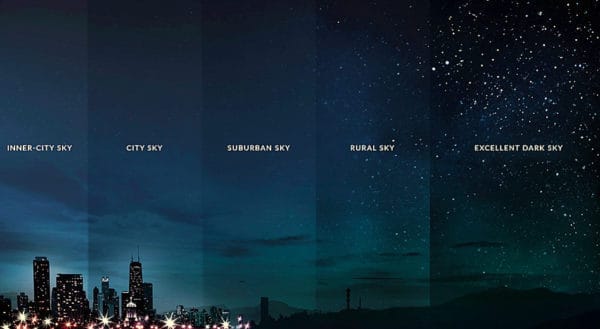
 What really happens is that the curtain light pollution creates cuts our link with the stars. In other words, we can no longer observe them. That's why astronomers and amateur astronomers care about this issue more than anyone.
I know that “light pollution” sounds very romantic when I put it this way. You might say, “So what if we don't see the stars?” But light pollution, which shows itself like this, actually upsets a balance that formed over billions of years. Since the very first day, the Earth has lived under 12 hours of sunlight and 12 hours of moonlight. This 24-hour cycle defines everything, for us and for every living thing in nature: body structure, feeding, migration routes, survival skills. And when this structure breaks, anomalies begin.
Electric lighting entered our lives about 130 years ago. Artificial lighting, which I'd call the most important invention of modernity, changed our lifestyle and our social and cultural structure. Modernity and artificial light walked arm in arm: where there was light, it counted as modern, and a lack of light counted as backwardness. As the night became part of social life too, we moved, at a pace that never stops, toward a 24/7 way of life. And we lost control. Things have now gone so far that they threaten the balance of nature, built over billions of years.
So what harm can a broken cycle do? Let me explain with a few examples.
- Harm to the environment: First of all, we're talking about wasted energy. At a time when energy matters this much, and when energy efficiency and sustainability are this prominent, all this wasted energy harms the environment indirectly. Because we also spend energy on these unnecessary lights. In the US, the energy wasted through light pollution is estimated at 2.2 billion dollars a year. (NOTE: It bothers me enormously that marketing uses energy efficiency and sustainability so much that it has, in a sense, emptied them of meaning. But that's a topic for another post.)
- Harm to animals: Birds that normally migrate by following the stars lose their way because of city lights, fly into skyscrapers and die. Again, we're talking about thousands of birds dying every year. Or take another example: sea turtles must reach the sea within 1-2 minutes of hatching. To do that, they follow the stars that guide them. But city lights near these beaches confuse them, and they become targets for predators.
- Harm to plants: The broken cycle also upsets the natural conditions of plants. As you can see in the example, different
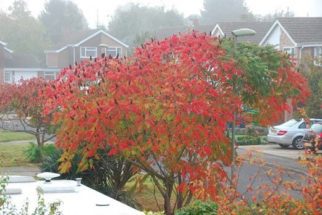 parts of a tree behave differently because of different light conditions. The part under the street light stays green as if it were still spring.
 - Harm to our health: In people, this cycle, formed over billions of years, is explained by something called the “circadian rhythm”. This rhythm runs in cycles of 24.5 hours. At its core, it has us active during the day and, at night, resting (thanks to sleep) so our body can renew itself. When we wake up in the morning, our brain releases the hormone cortisol to get us going. At night, before bed, it releases the hormone melatonin to prepare us for sleep. But the screens we use at home (TV, phone and so on) and the city lights that invade our homes suppress melatonin, and our sleep gets shorter and poorer. That causes health problems. For example, it has been proven that nurses who work night shifts are 50% more likely to get cancer.
For all these reasons, we need to get rid of light pollution, that is, unnecessary lighting (what we could call “spam” lighting, in a sense), and stop upsetting the balance of nature.
The work in Türkiye
I first came across the idea of light pollution in 2011. At the PLDC event in Madrid, I had the chance to watch a 52-minute documentary called “The City Dark”, which explains the concept from every angle, and it moved me deeply. The very next year, we organised screenings in İstanbul, İzmir and Ankara so that more building professionals could see the film.
You can watch this talk I gave at YEM in 2013 about the film and about light pollution in general:
At the end of this period, when I had the chance to dig into the subject a bit more, I met Zeki Aslan Hoca (hoca is how Turks address a respected teacher), who has in fact led the way on this issue for years. Zeki Hoca founded the Tübitak observatory in Antalya and even drafted a bill on the subject back in 1999. In 2013, he and I were both speakers at the “Light Pollution in Türkiye” seminar that we organised. Our joint work has continued ever since.
Bless them: Zeki Hoca and fine people like Bülent Aslan, Dursun Koçer and Memduh Sami Taner work with superhuman effort to take the subject further. With the website they set up, www.isikkirliligi.org, and the TİKE project, they map light pollution in Türkiye and raise awareness, and they really do put in a superhuman effort.
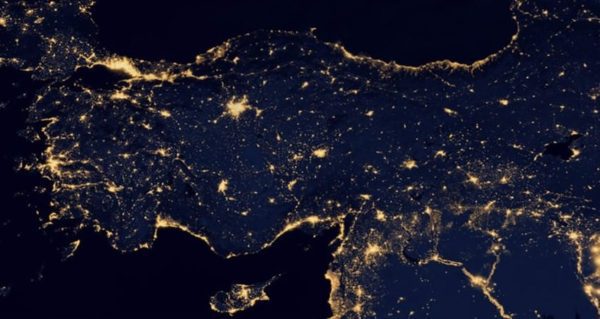
Above all, through the “Astronomi Öğretmenleri Seminerleri” (AÖS, the Astronomy Teachers' Seminars), which they have invited me to regularly since 2014, they raise awareness first among teachers and, through them, among the children who will build the future. It's such a valuable effort that I get goosebumps every time I think of it. Here, an anecdote Bülent Aslan Hoca tells is lovely too. They tell a public official about “light pollution”. He knows nothing about it. That evening at home, he talks with his son, who goes to primary school, and gets a small lesson on light pollution and its harms. After that, his whole approach to the subject changes.
Beyond these seminars, they help these teachers prepare European Union projects, and they also sign joint projects with the municipalities they work with. Mapping light pollution in Eskişehir and in Nilüfer, a district of Bursa, are some of these projects.
Here I want to give them their due once more. However much we thank them all for these efforts, it will never be enough…
What can be done?
Light pollution is actually a problem whose solution has no losers, so every step we take on it will bring good results for all of us. The image below may be the one used most often to show the solution. Even directing light only to where it should go is a big step.
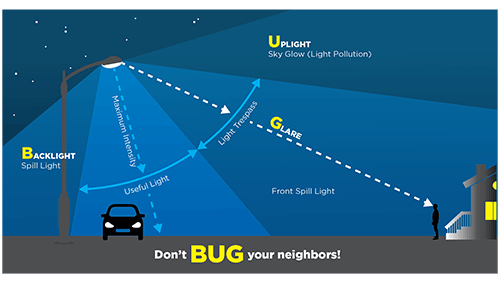
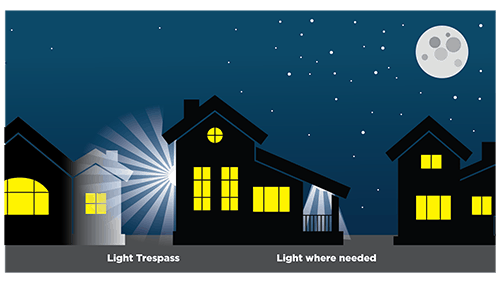
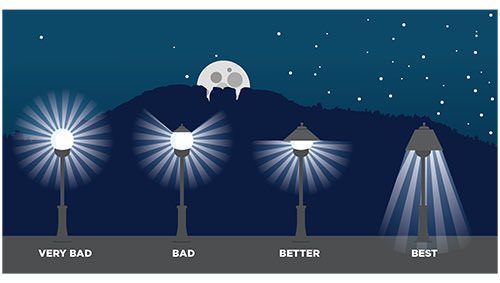
The simplest way to get rid of the problem is “to design the lighting”. So for someone like me, who has been saying “lighting design matters” for years, the solution is a gold mine. As lighting really gets designed and awareness of light pollution grows, we'll see the problem start to disappear.
On this point, I have a few proposals in mind that I've been thinking about for a while and that could solve a large part of the problem. But I'll share them in more detail in my next post.
Emre Güneş
PLD Türkiye